What Is Rapid Prototyping?
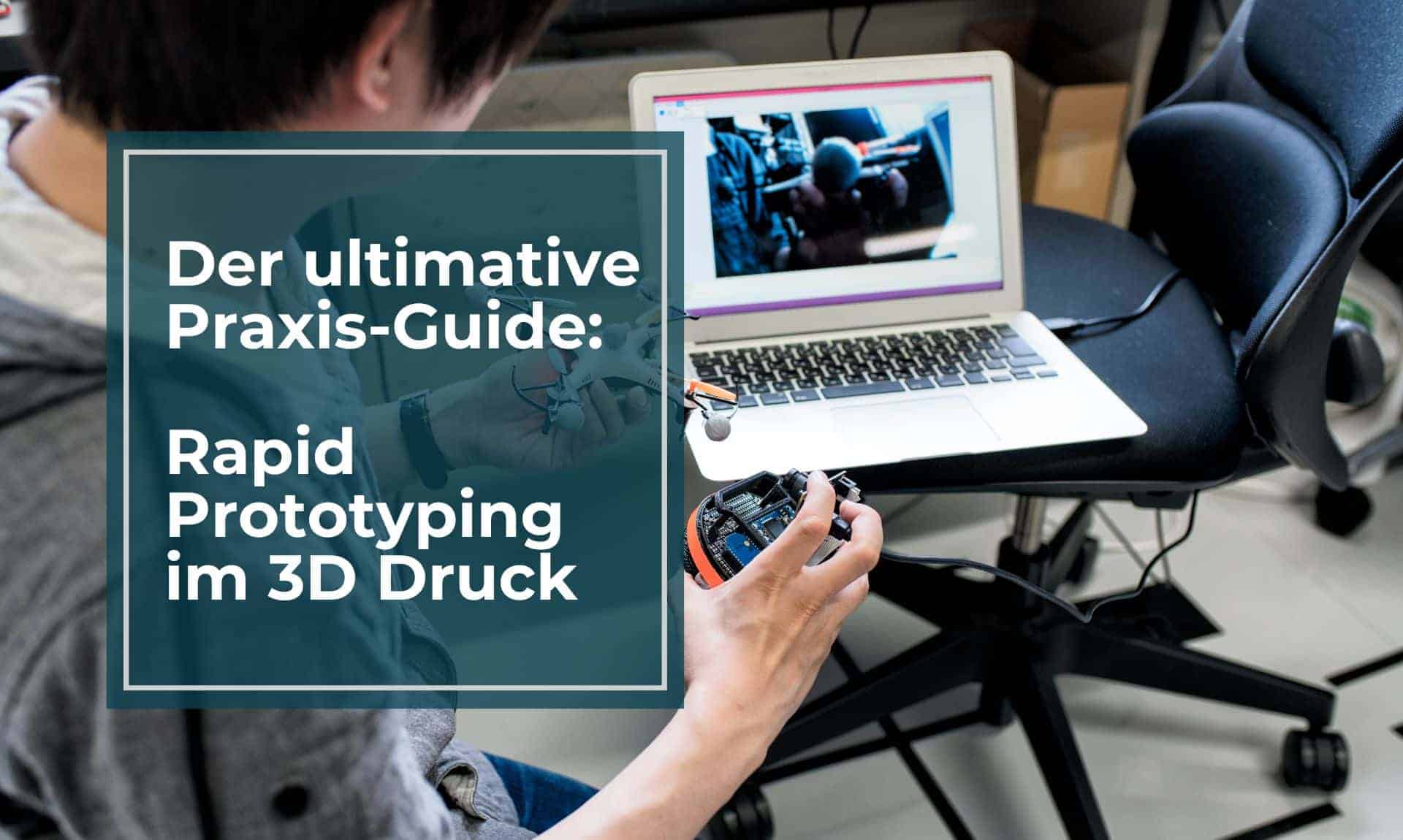
Rapid prototyping is the fast construction of prototypes for early validation of form, fit, and function. 3D printing is today the most widely used tool for this purpose — because it requires no tooling costs and delivers results within hours.
The Three Prototype Types
1. Concept Model (Visual Mock-up)
Used for visualization and communication — not for function. PLA is sufficient here. Print time: a few hours.
2. Functional Prototype
Tests mechanical properties, fits, and tolerances. This is where engineering materials like ABS, PETG, or PA12 come into play.
3. Pre-production Prototype
Close to the series part, often in production-equivalent material or with production-grade surface quality (e.g., via SLS or SLA).
The Rapid Prototyping Process
- Create CAD model — reference scans can also serve as the basis
- Choose print process and material — based on requirements and budget
- Slice and set print parameters — layer height, infill, supports
- Print — manufacturing time is typically 2–24 hours depending on part size
- Post-process — remove supports, sand, paint
- Test and iterate — incorporate feedback and start the next iteration
Advantages Over Traditional Methods
- No tooling costs: No injection mold required
- Fast iteration: Design change → new part within a day
- Geometric freedom: Complex shapes at no additional cost
- Risk reduction: Identify mistakes early, before serial production begins
Typical Use Cases
- Product development and design validation
- Trade show builds and product presentations
- Customer projects in mechanical engineering
- Medical device prototypes
- Architectural models
Tip: Iteration Over Perfection
The biggest mistake in rapid prototyping is striving for the perfect first prototype. Instead, start fast with a simple model, test it, and build iteratively on what you learn. Three prototypes in one week deliver more value than one “perfect” prototype in a month.