The Path from Scan to CAD
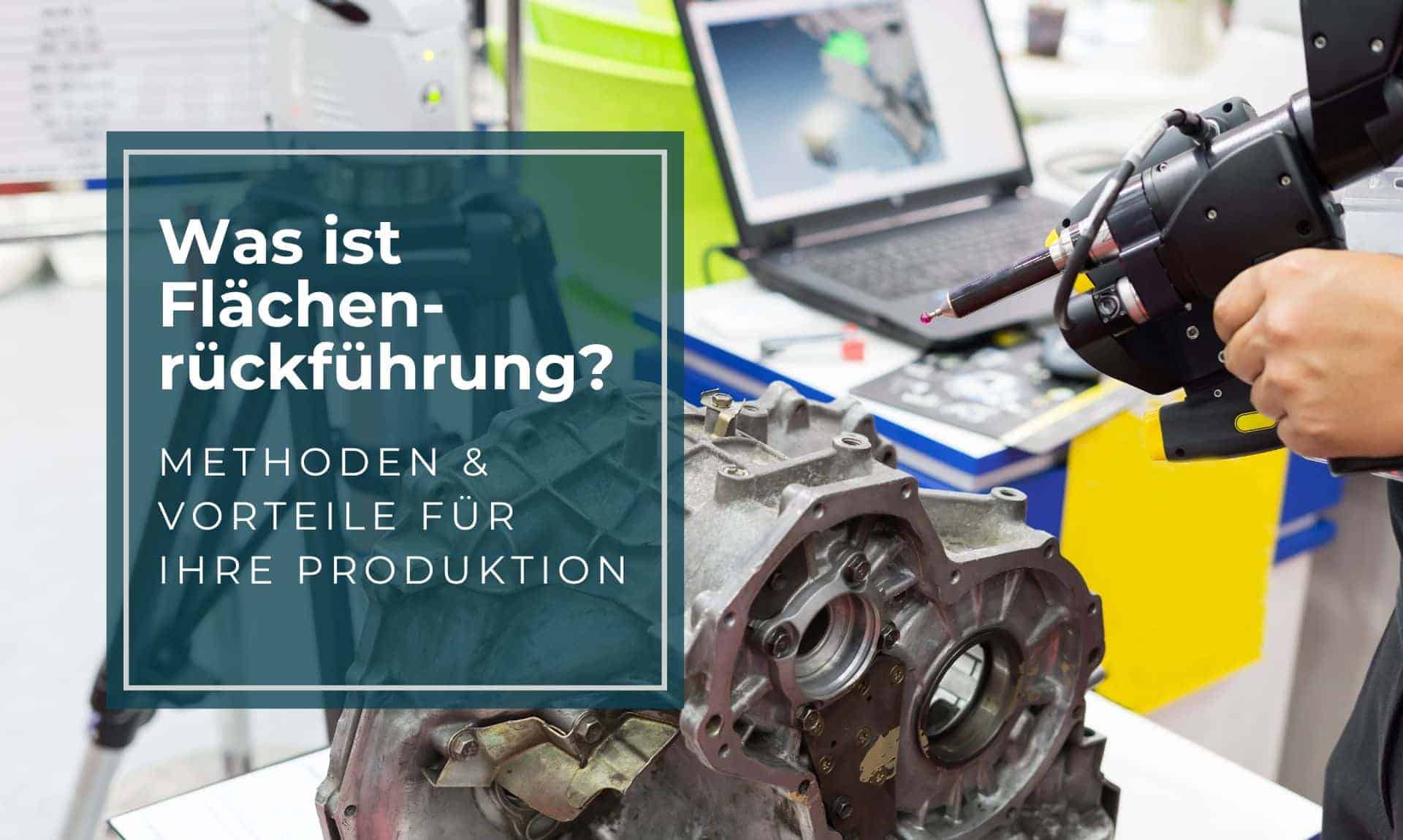
A 3D scan initially produces a point cloud or polygon mesh — a digital representation of the object surface made up of millions of individual measurement points. This data is highly accurate but cannot be directly edited in CAD software.
Surface reconstruction (also known as reverse surface engineering) is the process of creating a parametric CAD model from this scan data — with true geometric elements such as planes, cylinders, freeform surfaces, and edges.
Why Is Surface Reconstruction Necessary?
Scan data and CAD models differ fundamentally:
| Property | Scan Data (Mesh) | CAD Model |
|---|---|---|
| Data format | STL, OBJ, PLY | STEP, IGES, Parasolid |
| Editability | Mesh editing only | Fully parametric |
| Dimensional changes | Very labor-intensive | Simple via parameters |
| CNC manufacturing | Not directly usable | Directly usable |
| File size | Very large | Compact |
Without surface reconstruction, a 3D scan remains a digital replica — but not a tool for engineering and manufacturing.
The Process Step by Step
1. Scanning and Preparation
The physical object is digitized using laser or structured light scanning. The raw data is cleaned up: removing noise, closing holes, and eliminating outliers.
2. Alignment and Referencing
The mesh is aligned in the coordinate system. Reference points, symmetry axes, and datum planes are defined.
3. Surface Recognition
The software identifies basic geometric shapes within the mesh:
- Planes (flat surfaces)
- Cylinders (bores, shafts)
- Cones and spheres
- Freeform surfaces (organic geometries)
4. Surface Creation and Fitting
The recognized shapes are reconstructed as parametric CAD surfaces. Freeform surfaces are approximated using NURBS curves. The deviation from the original scan is monitored — typical tolerances range from 0.01 to 0.1 mm.
5. Solid Model Creation
The individual surfaces are joined into a closed solid body — ready for design modifications, FEM simulation, or CNC programming.
Typical Applications
- Reverse engineering: Reconstructing parts without drawings
- Spare parts production: Capturing worn parts as CAD models for remanufacturing
- Tooling and mold making: Digitizing existing molds and optimizing them
- Quality control: Nominal-actual comparison between CAD design and manufactured part
- Design adaptation: Modifying and evolving existing geometries
Software Used
Professional surface reconstruction requires specialized software such as Geomagic Design X, SpaceClaim, PolyWorks, or CATIA Reverse Engineering. These tools offer automatic surface recognition, deviation analysis, and seamless CAD integration.
Conclusion
Surface reconstruction bridges the gap between the physical world and digital engineering. It is the key to converting existing parts into editable, manufacturing-ready CAD models — indispensable for reverse engineering, spare parts production, and modernizing existing products.