Where 3D Printing Really Pays Off
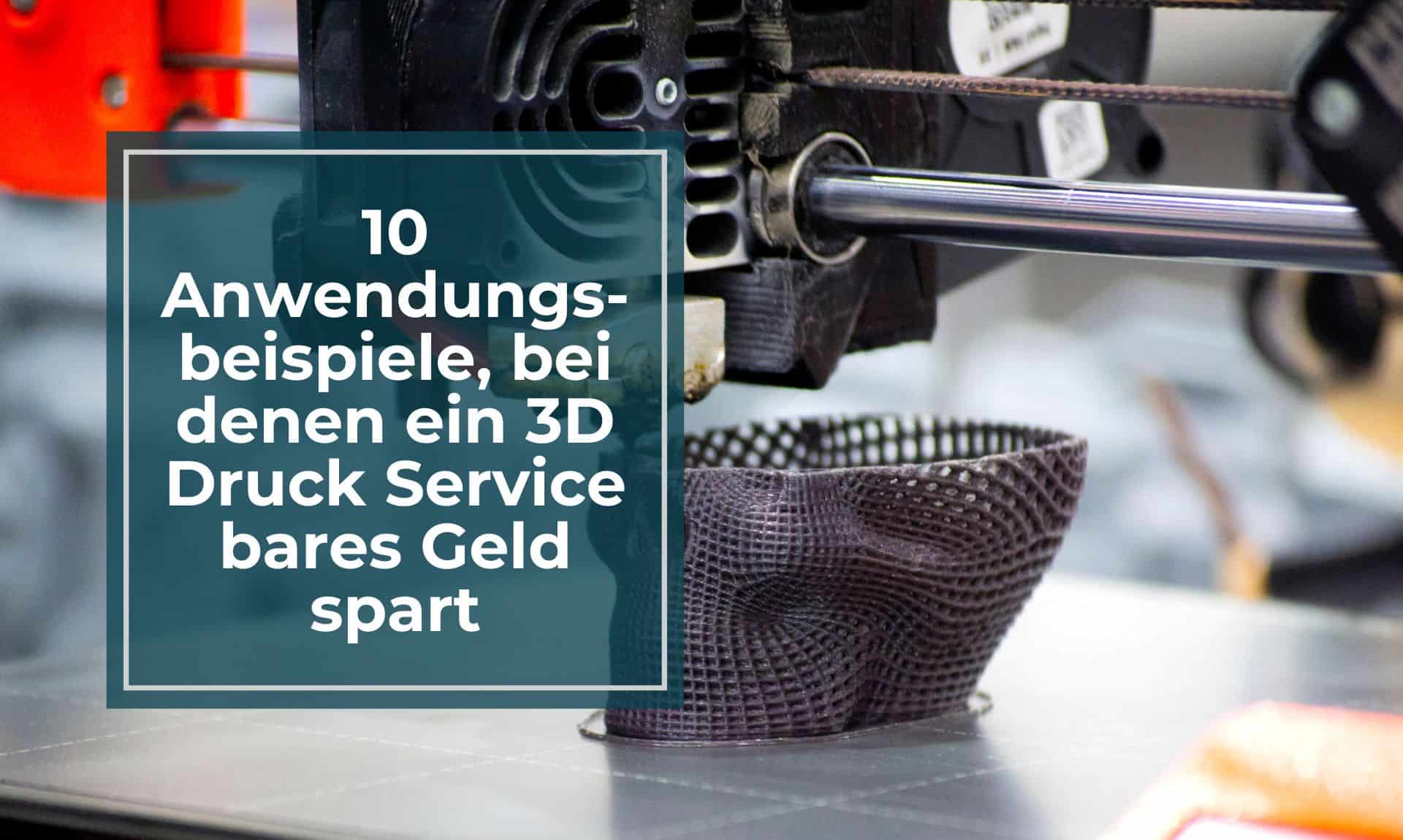
Additive manufacturing is far more than a novelty — it is a serious tool for reducing costs. With the right 3D printing service, many projects can achieve significant savings without compromising on quality or precision. Here are ten real-world examples.
1. Custom Production Without Tooling Costs
Traditional manufacturing requires expensive injection moulds or milling fixtures. 3D printing eliminates these investments entirely. Especially for prototypes and small batches, this means savings of several thousand euros per project.
2. Reduced Inventory
Why produce hundreds of parts in advance? With a digital warehouse and on-demand manufacturing, you print exactly when needed. This saves storage costs, reduces tied-up capital, and avoids overproduction.
3. Material Efficiency
As an additive process, 3D printing deposits material only where it is needed. Compared to subtractive methods like CNC milling, significantly less waste is produced.
4. Rapid Prototyping
Functional models can be created within hours or days. Iterative design optimisation without new tooling dramatically shortens time to market — and every development week saved counts.
5. Economical Small-Batch Production
For 10 to 1,000 units, 3D printing is often the most cost-effective method. No tooling costs, short lead times, and flexible adjustments without additional charges make small batches profitable.
6. Spare Parts Production
Discontinued components for older machines can be captured via 3D scanning and reprinted. Fast repairs minimise costly production downtime.
7. Medical Applications
Patient-specific models, prosthetics, and surgical planning models significantly reduce material and labour costs compared to conventional manufacturing.
8. Mechanical and Automotive Engineering
Specialised parts are produced in days instead of weeks. Topology optimisation enables lightweight designs that save energy and costs in moving systems.
9. Architecture and Scale Modelling
Highly detailed presentation models are created directly from CAD data — without manual work or material waste. Design changes can be implemented at short notice.
10. Personalised Products
One-off items and custom parts without minimum order quantities: from personalised housings to bespoke adapter components, 3D printing delivers precisely tailored solutions.
Conclusion: Targeted Resource Deployment
3D printing is often cheaper than traditional processes because no series production setup is required and changes are implemented through simple file modifications. The core advantage lies in targeted resource deployment with minimal unnecessary expenditure.
Want to find out whether 3D printing can reduce costs in your project? Contact Reents Technologies at info@reents3d.de or +49 40 56118777.