Two Terms, One Process?
In industry and technical conversations, you’ll encounter both: Additive Manufacturing and 3D Printing. At first glance, they seem to describe the same thing — but there’s an important distinction in context and usage.
What Is “Additive Manufacturing”?
Additive Manufacturing (AM) is the technical umbrella term for all processes where a component is built up by adding material layer by layer. DIN EN ISO/ASTM 52900 defines additive manufacturing as “a process of joining materials to make objects from 3D model data, usually layer upon layer, as opposed to subtractive manufacturing methodologies.”
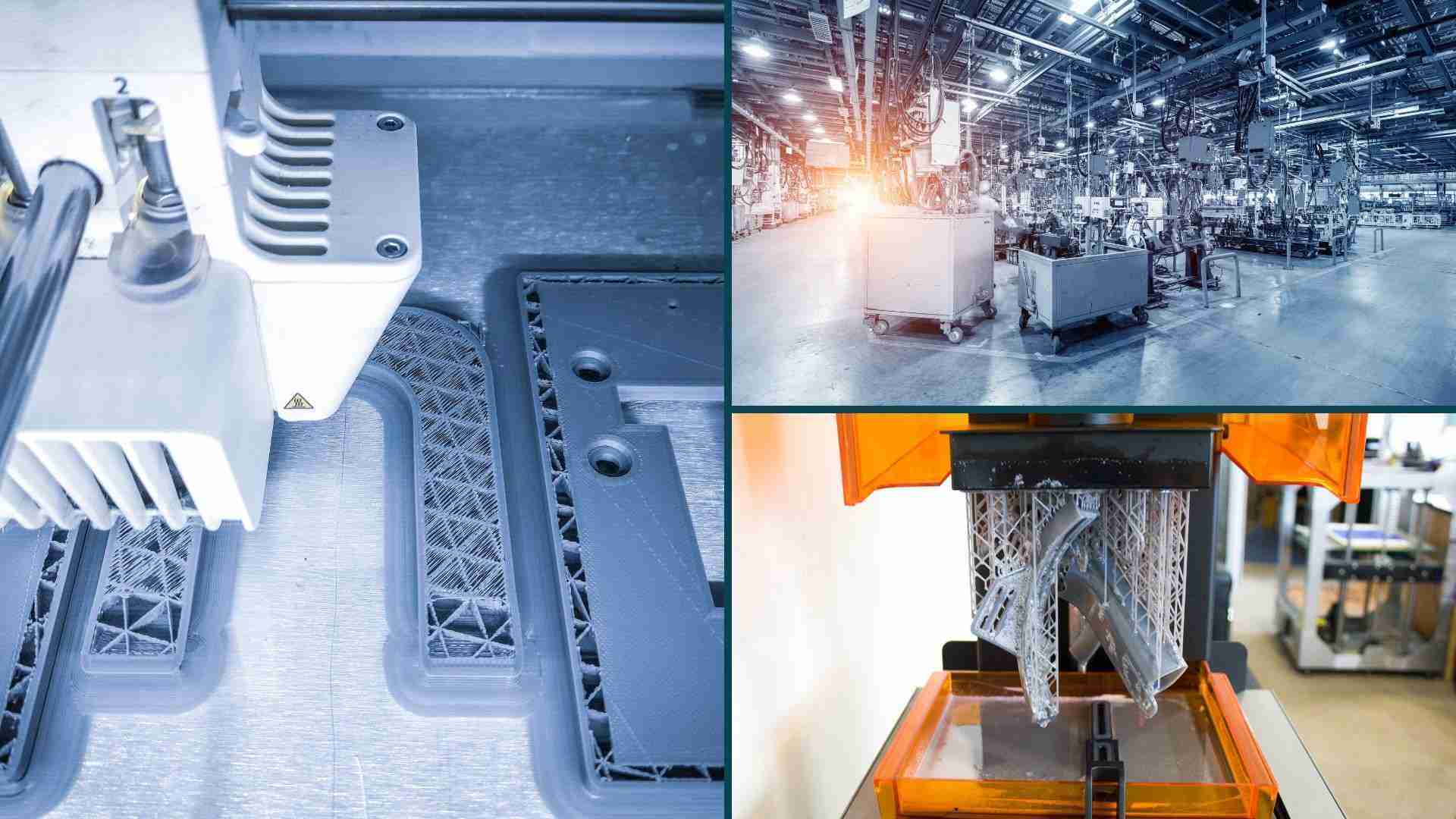
Common additive manufacturing processes include:
- FDM (Fused Deposition Modeling) — material extrusion
- SLA (Stereolithography) — UV resin curing
- SLS (Selective Laser Sintering) — powder bed with laser
- DMLS (Direct Metal Laser Sintering) — metal parts via laser
What Is “3D Printing”?
3D printing was originally an MIT trademark from the 1990s that evolved into common parlance. Today it’s used synonymously with additive manufacturing — especially in consumer markets and media coverage. The term is less precise but broadly understood.
Why the Distinction Matters
In professional settings, engineers and manufacturers prefer “Additive Manufacturing” because the term:
- Aligns with norms and standards
- Covers all process groups
- Carries more gravitas in industrial contexts
For customer communication and general contexts, “3D printing” is entirely appropriate — and widely used by us as well.
Conclusion
Both terms describe the same fundamental principle: material is added layer by layer to create a three-dimensional object. Understanding the background lets you choose the right term for the situation — and make a strong impression in technical discussions.