What Is FDM?
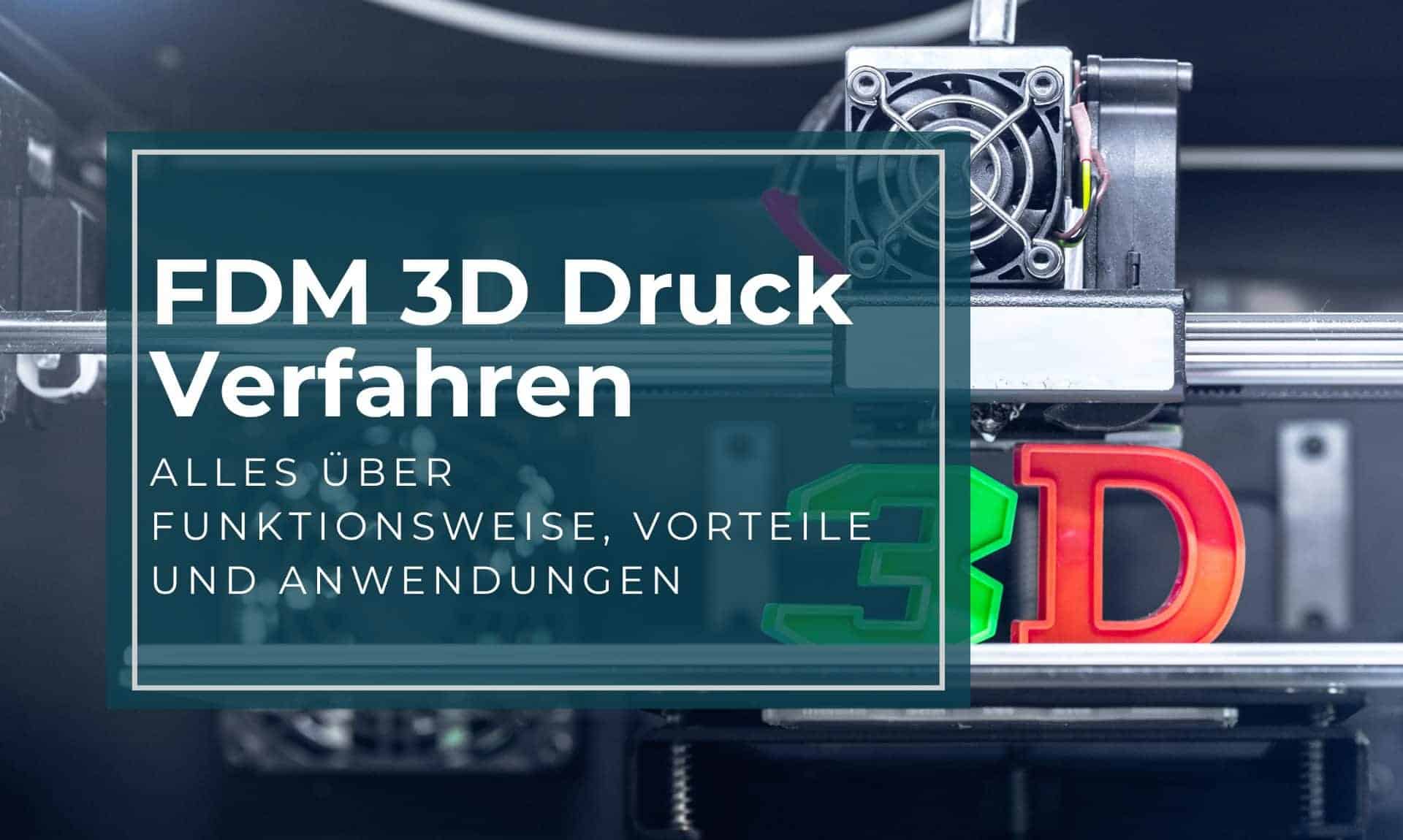
Fused Deposition Modeling (FDM) is the most widely used 3D printing process. A thermoplastic filament is melted through a heated nozzle and deposited layer by layer on a build platform. This creates a three-dimensional part one layer at a time.
How Does FDM Work?
- The filament is fed from a spool into the extruder
- The extruder heats the material to melting temperature (190–260 °C depending on material)
- The nozzle moves across the build platform, depositing molten plastic
- The first layer adheres to the print bed (optionally heated)
- After each layer, the bed lowers or the print head raises by one layer height
- The process repeats until the part is fully built
Key Print Parameters
- Layer height: 0.1–0.4 mm (affects surface quality and print time)
- Nozzle diameter: Standard 0.4 mm, alternatively 0.2–1.0 mm
- Print speed: 30–100 mm/s depending on quality requirements
- Infill: 10–100% (fill density determines strength and weight)
- Wall thickness: At least 1.2 mm for stable parts
Common FDM Materials
| Material | Temperature | Properties |
|---|---|---|
| PLA | 190–220 °C | Easy, affordable, bio-based |
| ABS | 220–250 °C | Tough, temperature resistant |
| PETG | 220–250 °C | Chemical resistant, food-safe |
| TPU | 210–230 °C | Flexible, rubber-like |
| ASA | 240–260 °C | UV resistant, weatherproof |
| PA/Nylon | 240–270 °C | Wear resistant, mechanically durable |
Advantages of FDM
- Cost-effective: Low material and machine costs
- Wide material range: From standard to high-performance plastics
- Scalable: From desktop printers to industrial XXL systems
- Fast iterations: Prototypes in hours instead of weeks
- Functional parts: Production-ready end-use products possible
Limitations of FDM
- Visible layer lines on the surface
- Anisotropy — layer adhesion is weaker than the layer plane itself
- Support structures needed for overhangs above ~45°
- Limited detail resolution compared to SLA or SLS
Typical Applications
- Prototypes: Rapid concept validation and design iterations
- Functional parts: Brackets, enclosures, jigs, and tools
- Spare parts: On-demand manufacturing without warehousing costs
- Trade show models: Scaled architectural and product models
- Small batches: Economical production starting from batch size 1
Conclusion
FDM is the most versatile and accessible 3D printing process on the market. It’s equally suited for prototypes, functional parts, and small-batch production. The keys to a great result are the right material selection, optimal print parameters, and a well-considered part orientation.