What Is PVA?
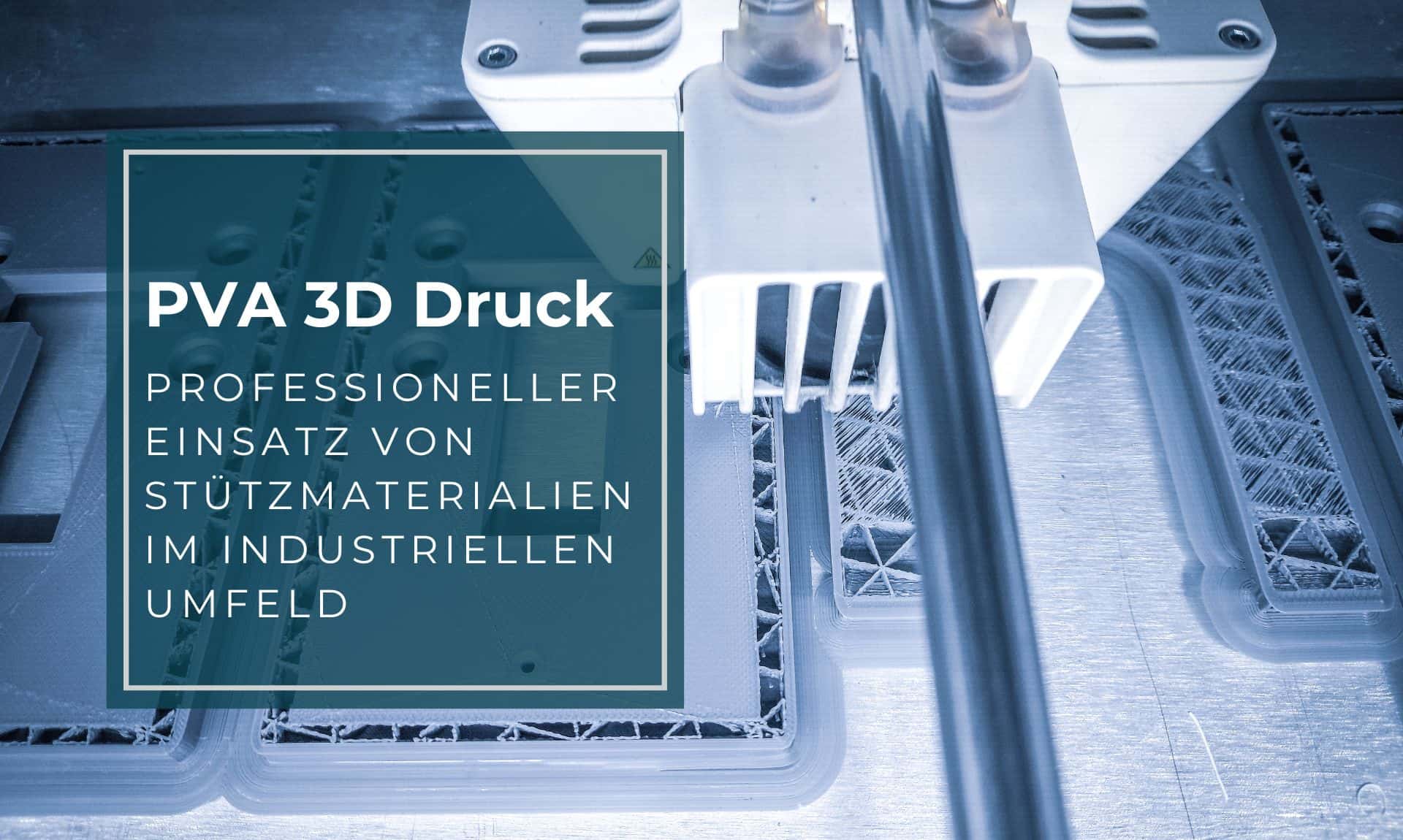
Polyvinyl alcohol (PVA) is a synthetic, thermoplastic polymer that dissolves completely in water. This property makes it the ideal support material in FDM 3D printing: complex geometries with overhangs and cavities are printed with PVA supports that simply disappear in a water bath afterward.
Material Properties
PVA is produced through hydrolysis of polyvinyl acetate (PVAC), where acetate groups are separated and converted into alcohol groups. The resulting properties:
- Water solubility: Complete dissolution in water
- Biodegradability: Environmentally friendly disposal
- High elongation capacity: Good adhesion on the print bed
- Resistance to oils and fats: Robust during the printing process
Print Parameters
For optimal results with PVA support material, we recommend the following settings:
| Parameter | Recommended Range |
|---|---|
| Nozzle temperature | 180–220 °C |
| Bed temperature | 0–60 °C |
| Print speed | 20–45 mm/s |
| Layer height | 0.15–0.2 mm |
| Fan cooling | 100% |
Important Notes
- PVA requires lower print speeds than the main material
- Retraction settings are critical to avoid stringing
- Nozzle temperature should not exceed 220 degrees Celsius as PVA degrades thermally
Removing Support Structures
The major advantage of PVA: support structures are dissolved in a water bath, not mechanically removed. This keeps even delicate surfaces undamaged.
Recommended procedure:
- Place the part in lukewarm water (approximately 35–40 °C)
- Stir occasionally or use an ultrasonic bath
- Dissolution time: 1–2 hours depending on support volume
- Rinse the part with clean water and allow to dry
Storage
PVA is highly hygroscopic and absorbs moisture from the ambient air. Improper storage leads to poor print quality, bubbling, and nozzle clogs.
Storage rules:
- Keep humidity below 50%
- Store in airtight containers with silica gel desiccants
- Dry at 45–50 °C for 4–6 hours before printing
- Use filament dry boxes during printing
Compatible Main Materials
PVA is particularly well suited in combination with:
- PLA: The standard combination, as print temperatures harmonize well
- PETG: Works with adjusted temperature profiles
- Nylon: For demanding industrial applications
Leading Manufacturers
Proven PVA filaments are available from eSun, Ultimaker, MatterHackers, and Polymaker. Quality differences are primarily apparent in moisture resistance and print consistency.
Conclusion
PVA support material opens new possibilities in FDM 3D printing. Geometries that would be impossible without soluble support material can be reliably produced. The key to success lies in proper storage and optimized print parameters.