What Is SLA?
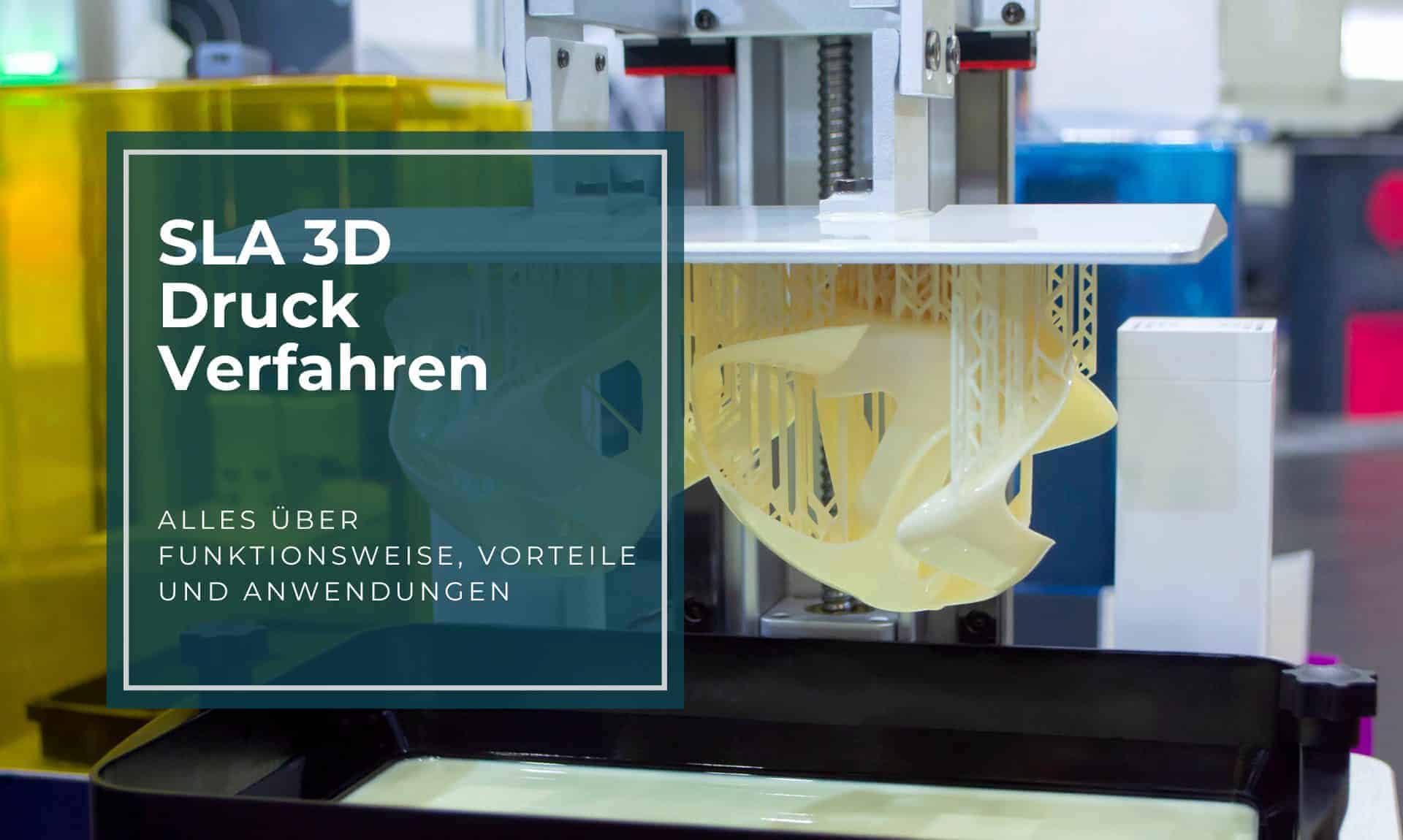
Stereolithography (SLA) is the oldest industrial 3D printing process — invented in the 1980s by Chuck Hull. A UV laser cures a liquid photopolymer resin layer by layer, producing parts with exceptional detail accuracy.
How SLA Works
- A build platform submerges into a resin bath
- A UV laser exposes the top layer of resin and cures it precisely
- The platform lifts by one layer height (typically 0.025–0.1 mm)
- The process repeats until the part is complete
- After printing, the part is washed and post-cured in a UV oven
Technical Characteristics
- Layer height: 0.025–0.1 mm (significantly finer than FDM)
- Surface quality: Very smooth, barely visible layer lines
- Dimensional accuracy: ±0.1–0.2 mm
- Build volume: Depending on printer, up to 300 × 335 × 200 mm
Materials
SLA resins come in many variants:
- Standard resin: Affordable, for prototypes and visualizations
- ABS-like resin: Tough and impact resistant for functional prototypes
- Flexible resin: Rubber-like properties
- Dental/medical resin: Biocompatible and sterilizable
- Castable resin: Burn-out capable for jewelry casting
Advantages of SLA
- Excellent surface quality directly from the printer
- Very fine details and sharp edges
- Wide material selection with specific properties
- Ideal for jewelry, dental, figurines, and precision prototypes
Limitations of SLA
- Resins are UV-sensitive — parts yellow and become brittle with prolonged sun exposure
- Post-processing required (washing, post-curing)
- Higher material costs than FDM filaments
- Toxic resin fumes require safety precautions
SLA vs. FDM — When to Use Which?
| Criterion | SLA | FDM |
|---|---|---|
| Surface quality | Very smooth | Layer lines visible |
| Material range | Resins (specific) | Filaments (broad) |
| Cost | Higher | Lower |
| Ideal for | Precision, optics | Function, size |
For parts where surface aesthetics and detail fidelity are critical, SLA is the right choice.