Breaking Boundaries: 3D Printing at XXL Scale
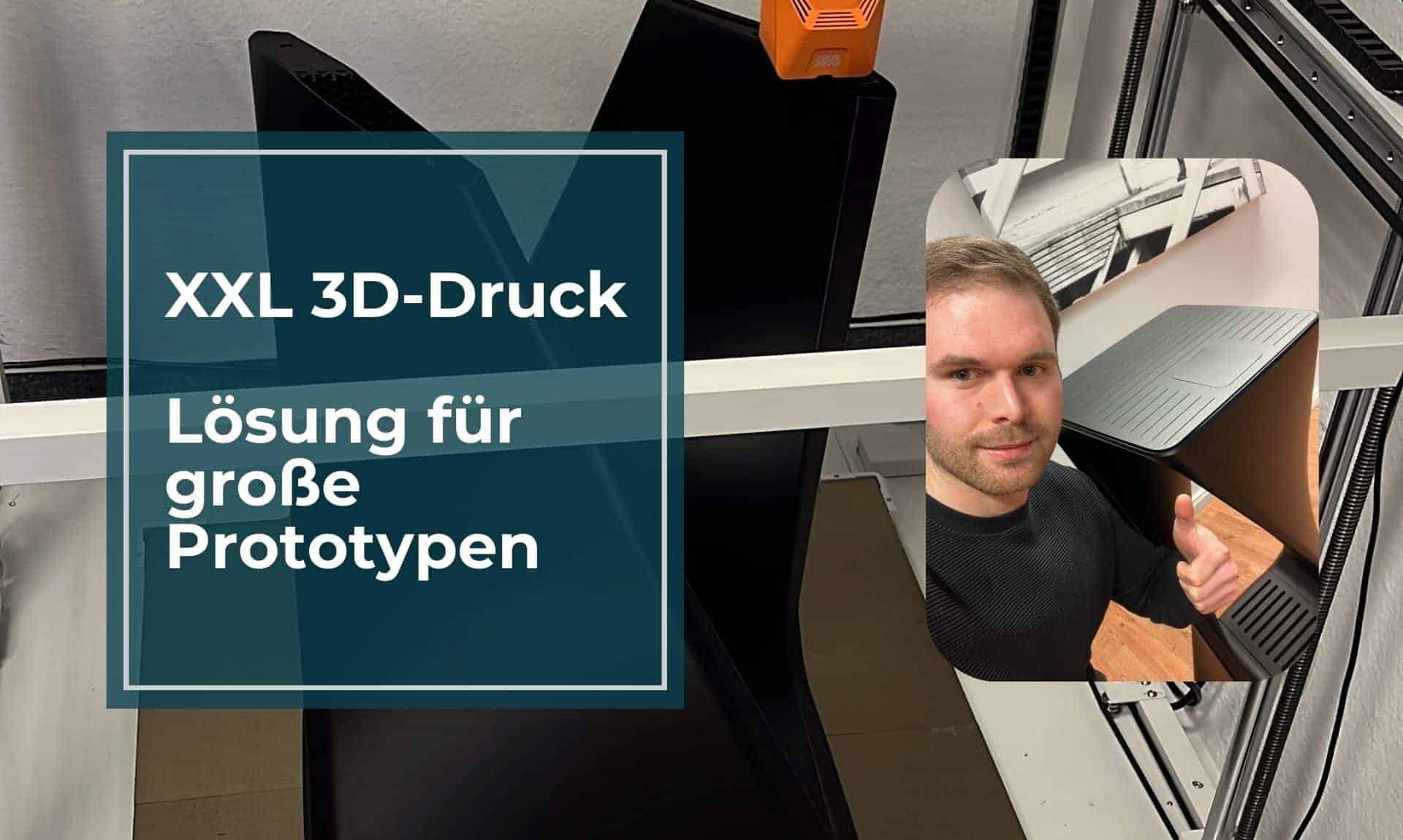
A standard printer stops at around 300 × 300 mm. But what if a part needs to be a meter — or five — long? This is where XXL 3D printing comes in: a niche area with growing importance in industry, film, and trade show construction.
Processes for Large Parts
FDM with Large-Format Printers
Pellet extruders instead of filament, print heads on industrial robots or gantry systems — build volumes up to 5 m × 5 m × 3 m are achievable today. Material throughput reaches several kilograms per hour.
Segmented Printing
For parts that exceed the print volume, segments are printed and then joined:
- Adhesive bonds with epoxy or cyanoacrylate
- Mechanical connections (screws, dowels)
- Laminated joints for structural applications
Application Areas
Trade Shows and Displays
Custom-made exhibition pieces, product displays, and stand objects are frequently produced by XXL printing — cheaper and faster than traditional craftsmanship.
Film and TV Props
Props and set pieces can be manufactured precisely from digital templates. Especially for futuristic or fictional objects, 3D printing is unbeatable.
Automotive and Mechanical Engineering Prototypes
Cockpit mock-ups, body panels, and machine housings are printed as 1:1 prototypes before expensive tooling is ordered.
Architectural Models
Scale city models, building facades, and interior concepts — XXL printing offers precision that handcrafted models rarely achieve.
Materials for XXL Parts
- PLA pellets: Affordable and easy to process, ideal for indoor objects
- ABS/ASA: For outdoor applications with UV resistance
- PP (Polypropylene): Lightweight and chemical resistant
- Glass fiber-filled compounds: For structural parts with increased stiffness
Challenges
- Warping in large parts: Temperature management and slow cooling are critical
- Joint processing: Adhesive seams must be carefully filled and sanded
- Surface finishing: Filling, sanding, painting — a significant effort for XXL parts
- Transport and logistics: Parts up to 5 m long require special transport solutions
Conclusion
XXL 3D printing opens possibilities that classical manufacturing methods cannot offer. With the right planning, even unusually large objects can be produced economically and precisely.